
Kids' Clothing Sizes in the UAE: What 92, 104 and 128 Actually Mean
If you have just moved to the UAE and picked up a label reading 116 where you expected “5–6 years”, here is the short answer: the number is your child's height in centimetres. That is all it is. Everything below is the detail.
The number is a height, not an age
British and American kidswear is sized by age: “5–6 years”, “7T”. Most European brands, ON7 included, size by height instead. A garment marked 116 is cut for a child who measures 116cm, whether they got there at four or at six.
This trips up a lot of parents in Dubai, because the shops here sell both systems side by side. A rail of European brands next to a rail of American ones, using numbers that look similar and mean completely different things. A “6” on one rail is an age. A “116” on the next is a measurement.
The full chart
Ages are approximate and always will be, because children of the same age vary enormously. The height column is the one to trust.
| ON7 size | Height | Age | UK | US |
|---|---|---|---|---|
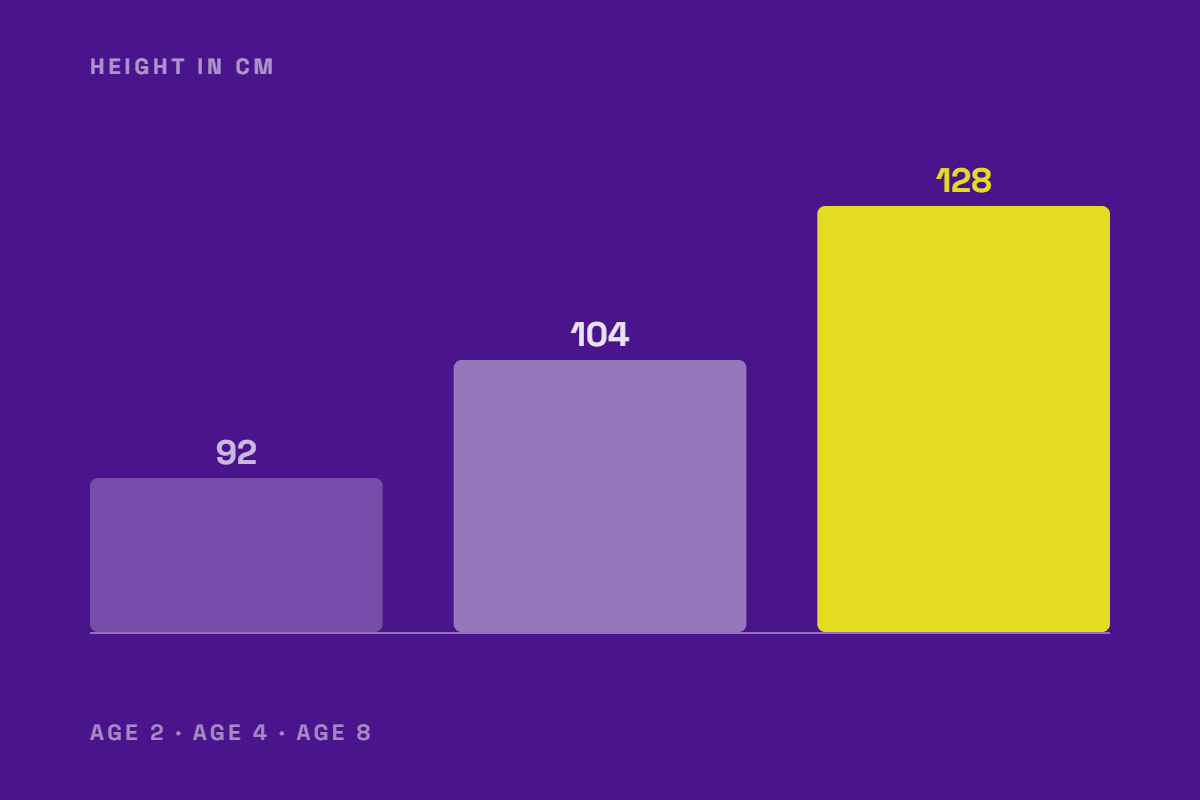
| 92–98 | 92–98cm | 2–3 | 2–3y | 3T |
| 98–104 | 98–104cm | 3–4 | 3–4y | 4T |
| 104–110 | 104–110cm | 4–5 | 4–5y | 5 |
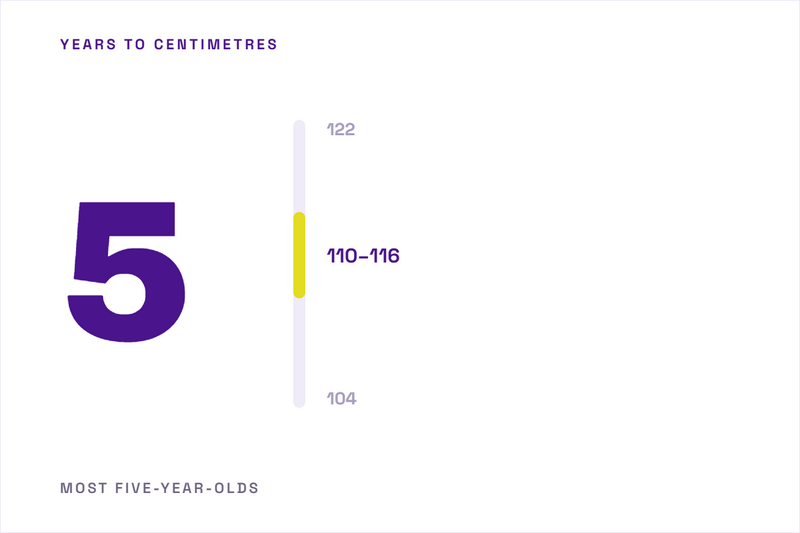
| 110–116 | 110–116cm | 5–6 | 5–6y | 6 |
| 116–122 | 116–122cm | 6–7 | 6–7y | 7 |
| 122–128 | 122–128cm | 7–8 | 7–8y | 8 |
| 128–134 | 128–134cm | 8–9 | 8–9y | 10 |
| 134–140 | 134–140cm | 9–10 | 9–10y | 10–12 |
| 146–152 | 146–152cm | 11–12 | 11–12y | 14 |
UK and US equivalents are guides only. Those systems are sized by age and vary between brands, so two “6”s from different labels can differ by several centimetres.
How to measure, in thirty seconds
01
Shoes off, back to a wall
Heels touching the skirting, standing straight, looking forward.
02
Flat object on the head
A book works. Keep it level, mark the wall in pencil underneath it.
03
Measure floor to mark
That number is the size. A child measuring 118cm takes 116–122.
Measure in the evening
Children are genuinely a little shorter by the end of the day, because the spine compresses as they move about. If a morning measurement puts your child right on the edge of a band, an evening one will usually settle the argument.
Why height beats age
Take any classroom of six-year-olds in Dubai and you will find a spread of fifteen centimetres or more between the shortest and the tallest. Sizing by age asks one label to cover all of them, which is why “5–6 years” fits some children beautifully and swamps or strangles the rest.
Height sizing sidesteps the problem. You are not guessing at an average child; you are matching a measurement to a garment drafted for that measurement.
When your child is between two sizes
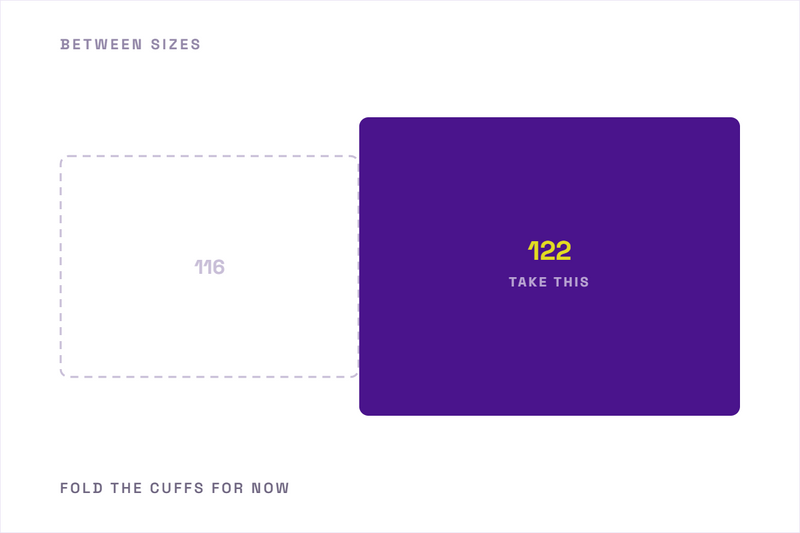
Take the larger one. Two reasons. Children grow through a band in months, not years, so the smaller size has a short life ahead of it. And everything we make is already cut roughly half a step generous, with ribbed cuffs on the hoodies and joggers that fold back, so a size up looks deliberate now and simply unfolds later.
The one exception is a child sitting at the very bottom of a band who has been there a while. If they measure 116cm and have not moved in six months, 110–116 will fit better today than 116–122.
Still not sure?
Send us your child's height and we will tell you exactly which size to take. Faster than a return, and we answer the same working day.