
Matching Sets: Why One Roll of Fabric Matters
Buy a graphite hoodie in September and graphite joggers in January and they will not be the same graphite. Not because anyone made a mistake, but because of how fabric is dyed.
Dye lots drift
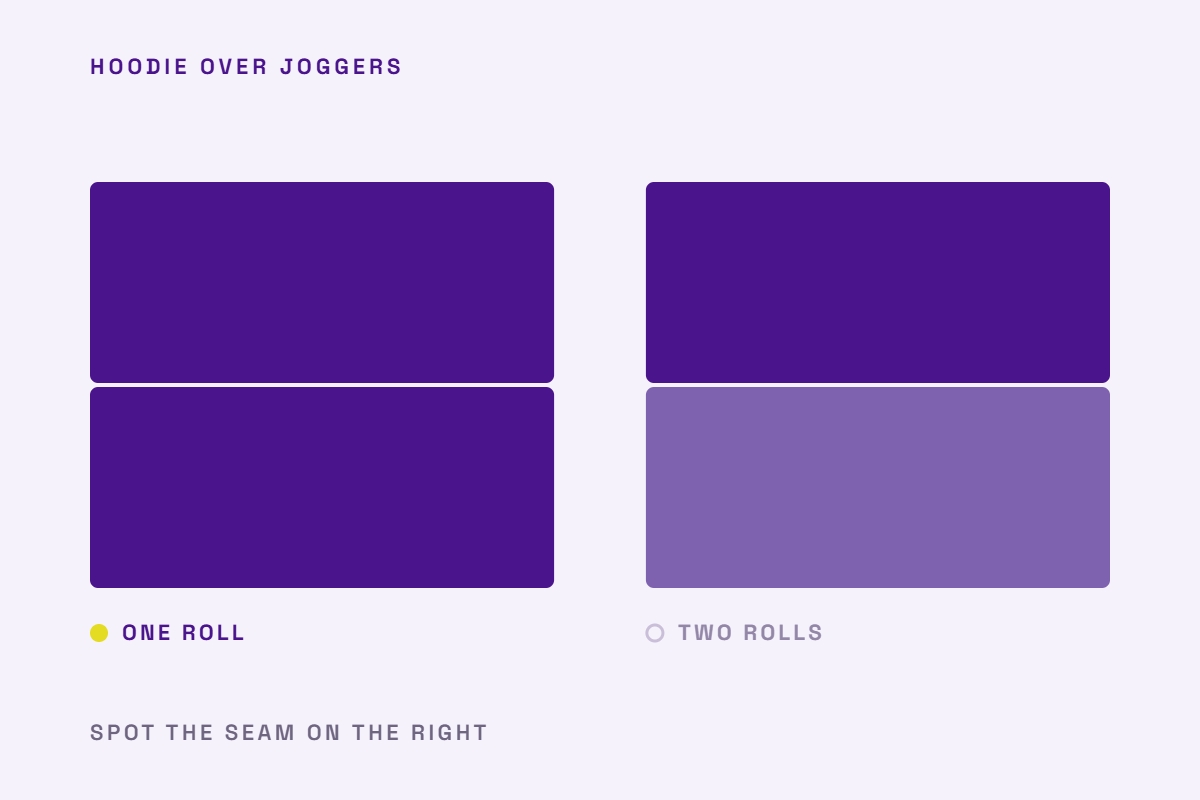
Fabric is dyed in batches. Every batch is mixed to the same recipe, and every batch comes out very slightly different: water, temperature, the cotton itself. Within a single roll the colour is consistent. Across two rolls dyed weeks apart, there is a small shift.
Standing in a shop you would never see it. Side by side on a child, in daylight, after both have been washed a dozen times, you absolutely do. The two pieces fade from slightly different starting points and the gap widens.
What we do instead
A set is cut from one roll, in one go. The hoodie and the joggers come off the same length of futer, so they start identical and age identically. Fifty washes later they still read as a pair, because they never had a difference to grow.
It costs more to plan production this way and it caps how many sets exist, which is part of why we make one run and stop.
Keep them together
Wash both halves of a set together, and to the same rules: cold, inside out, no softener. Washing one twice as often as the other undoes the point. More in how to wash kids' clothes.
The other reason sets earn their place
Less romantic, and probably more useful: a set removes a decision on the morning when there is no time for one. Everything else in the wardrobe can be mixed. The set is the outfit nobody has to negotiate.
Cut as a pair
Hoodie and joggers from one roll of futer, priced as a pair. Free UAE delivery.
Shop matching sets